


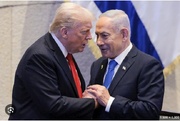
In a recent speech, Donald Trump told the American people that they do not need the Strait of Hormuz and, regardless of public concerns about rising oil prices, called on other countries to ensure the security of this strait and the passage of oil through it.
Trump also called on oil-importing countries to buy from the United States. During his first term as president (2017), he also said to workers in Pennsylvania that America no longer needs oil and gas from West Asia and that his goal is for America to dominate the energy market.
The Persian Gulf contains about 50% of the world’s proven oil reserves and 30% of the world’s natural gas reserves, and this Strait is a strategic passageway that connects the Persian Gulf to the high seas. This strait is the world’s most important oil transit bottleneck, with more than 20% of the world’s oil supply flowing through it daily. When Trump says he does not need the Strait of Hormuz, it means that he does not care about the Persian Gulf.
But does America not need this region? This issue will be briefly examined.
1. After entering the White House in his second term, Trump traveled to the Persian Gulf region and three countries, Saudi Arabia, Qatar, and the UAE, on his first foreign trip. Trump's first phone call with a foreign leader was with Mohammed bin Salman, Crown Prince of Saudi Arabia. He also traveled to Saudi Arabia on his first foreign trip in 2017 during his first term.
These trips should be evaluated in the context of Washington's increasing dependence on the Persian Gulf region to advance American interests, especially in the economic sphere. When announcing the priorities of his programs, Trump also said that signing economic agreements with wealthy Arab countries in West Asia plays a central role in his country's economy. He recalled the benefits of relations with the Persian Gulf countries to solve domestic economic challenges and hoped to attract a trillion dollars in investment from Saudi Arabia alone. The Saudi crown prince had also told Trump that his country hoped to increase trade and investment with the United States to $600 billion, but Trump again spoke of a trillion dollars in investment by Riyadh.
2. Trump’s visit to Qatar, the first by a US president to Doha, was an important sign of recognition of the small Persian Gulf state’s strategic position and a sign of the US's need to strengthen its presence in the region. The donation of a Boeing 747 to Qatar was a symbolic gesture that confirmed the US need for economic cooperation in the Persian Gulf. Trump’s stop in Doha and his marketing of American products led to Qatar Airways purchasing 210 Boeing aircraft worth approximately $96 billion, defense deals worth nearly $3 billion, and Doha’s decision to invest $10 billion in Al-Udeid Air Base, the largest US military base in West Asia.
3. In the UAE, Trump called the Crown Prince of Abu Dhabi a friend and partner of the United States and announced deals worth $200 billion, including the sale of Boeing aircraft, joint projects in the energy sector and new technologies in this state.
The UAE head of state also promised to invest a staggering $1.4 trillion in the United States.
4. Trump’s trip to the Persian Gulf was also in the context of competition with China, as in recent years, China has become a global economic and digital power and has rapidly expanded its presence in the Persian Gulf region. Compared to the Chinese production capacity and the high trade deficit of the United States, the Americans seek to dominate the global production chain, and the large Persian Gulf market, and the signing of huge trade and arms agreements with the countries of this region is rooted in the serious competition of this country with China.
5. Access to Persian Gulf oil in order to meet the growing needs of the United States and maintain its oil reserves, and the openness of oil transportation routes through the Strait of Hormuz, is of utmost importance to Trump. In fact, control and dominance over the oil resources of this region is one of the components of America's superpower, and can maintain the leading position of the Western industrial world for this country.
Accordingly, the oil resources of the Persian Gulf have become the focus of America's attention in this region, and the openness of the Strait of Hormuz and the establishment of security for oil reserves and their transportation routes and oil export ports in the Persian Gulf are considered strategic goals of the United States in the region.
6. In a speech, Trump called on countries around the world, including Europe, to buy American oil instead of Persian Gulf oil transported through the Strait of Hormuz. This is despite the fact that, due to the distance and transportation costs, buying American oil and gas is not cost-effective for most countries in the world. American oil exports were expected to reach 2.94 million barrels per day by the end of 2023, and half of these exports, 1.71 million barrels per day, were sent to Europe.
However, according to the Oil Price report, Europe has reduced its imports from the United States due to high energy transportation costs. In February 2025, the British newspaper Financial Times reported that the European Union had spent 7% less on the country's oil and gas over the past four months, despite its promise to Donald Trump to buy $750 billion in energy from the United States over the next three years.
However, the unwillingness of countries around the world to buy energy from the United States also adds to the importance of Persian Gulf oil and the openness of the Strait of Hormuz.
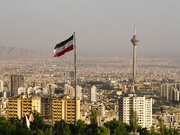
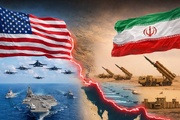
The Strait of Hormuz is the gateway for oil and commercial ships to enter and exit the Persian Gulf, and Trump's statements about America's lack of need for the Strait of Hormuz and calling on countries around the world to buy oil from the United States are intended to divert public opinion from the inability to open this Strait and a psychological operation to reduce the importance of strait and affect energy prices.
There is no doubt that the continued closure of the Strait of Hormuz to American ships will pose serious problems for the country in advancing its economic and security goals in the Persian Gulf and earning income from Arab countries.







Your Comment